

Case Studies (Real-World Applications)
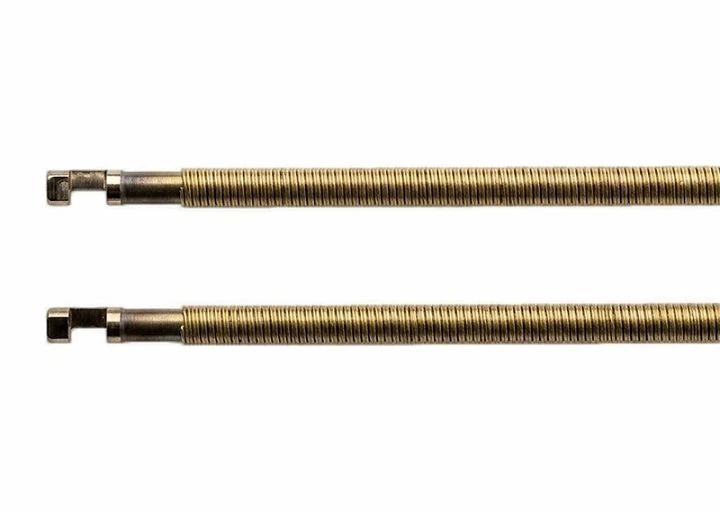
Case Study 1: Custom Laser-Slotted Nitinol Hypotube for 0.014" Neurovascular Microcatheter
Category: Neurovascular Delivery Systems
Clinical Application: Distal Intracranial Navigation & Ischemic Stroke Aspiration Catheters
Client Challenge:
A leading neurovascular device OEM required an ultra-flexible yet kink-resistant catheter distal shaft capable of navigating tight 90-degree bends in the M1/M2 cerebral arteries without ovalization or lumen collapse. Traditional fiber laser cutting produced thermal micro-cracking and excessive burrs, reducing push efficiency.
Medmicros Solution:
- Transition Pitch Cut: Designed a continuous pitch variation decreasing from 2.5 mm proximally down to 0.3 mm distally.
- Cold Femtosecond Laser Machining: Deployed ultra-short pulse femtosecond cutting to achieve zero Heat-Affected Zone (HAZ) and narrow kerf width of 18 μm.
- Post-Processing & Shape Setting: Implemented proprietary chemical micro-polishing and Af temperature tuning (Af: 25°C ± 3°C) for optimal superelastic recovery.
Measurable Results:
- 1:1 Torque Transmission: Zero distal lag angle during severe anatomical rotation.
- Zero Kinking: Passed severe 180° loop tortuous model testing with < 3% lumen deformation.
- High Manufacturing Yield: Assembly yield rate increased from 68% (previous supplier) to 98.2%.
Case Study 2: Ultra-Thin Wall Pt/Ir 90/10 Marker Bands for Coronary PTCA Balloon Assembly
Category: Cardiovascular Interventional Catheters
Clinical Application: PTCA Balloon Catheter Positioning & Stent Deployment Verification
Client Challenge:
A Tier-1 interventional catheter manufacturer faced high balloon membrane puncture rates and uneven crimping profiles when swaging 0.018 mm wall platinum-iridium marker bands onto Pebax® shafts.
Medmicros Solution:
- Precision Micro-Drawing: Diamond-die multi-pass cold drawing achieving OD/ID tolerance of ±0.003 mm and concentricity > 95%.
- Burr-Free Micro-Parting & Edge Radiusing: Proprietary laser parting and electrochemical polishing creating smooth, micro-radiused ends (R = 0.008 mm, Ra < 0.2 μm).
- 100% In-Line Vision Inspection: Automated optical inspection (AOI) verifying 100% zero burrs and wall uniformity.
Measurable Results:
- Zero Puncture Rate: Balloon assembly puncture rate reduced from 3.5% to 0% across 50,000+ units.
- Superior Fluoroscopic Contrast: Crisp, distortion-free X-ray visibility under low-dose imaging.
- Cost Optimization: Reduced precious metal kerf loss, delivering a 12% unit cost reduction.
Case Study 3: Parylene-C Coated Mandrel Solution for Laser Balloon Catheter Sleeve Welding
Category: Interventional Catheter Tooling & Assembly
Clinical Application: PTCA & PTA Balloon Catheter Distal/Proximal Sleeve Laser & Thermal Bonding
Client Challenge:
During the laser welding of ultra-thin Pebax®/Nylon balloon sleeves to the inner shaft, the client experienced severe molten polymer sticking to conventional bare SS304 and PTFE-coated mandrels. Pulling out the stuck mandrels frequently caused inner lumen stretching, micro-scratches, pinhole leaks, and PTFE coating flaking, leading to a 9.2% welding scrap rate.
Medmicros Solution:
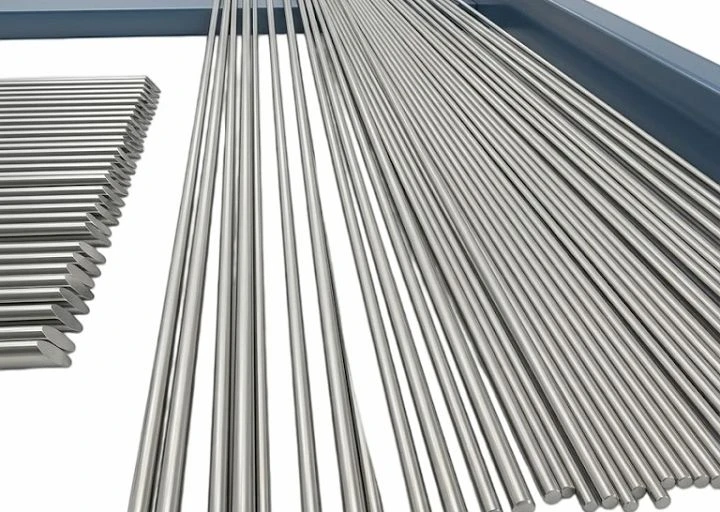
- Ultra-Precision Core Substrate: High-strength 304V stainless steel core pins with mirror finish (Ra < 0.04 μm) and tight diameter control (OD tolerance ±0.001 mm).
- Conformal Parylene-C Vapor Deposition: Applied a high-density, pinhole-free 2.5 μm Parylene C coating with superior molecular cross-linking.
- Thermal & Release Optimization: The coating offers a continuous thermal barrier up to 220°C and ultra-low surface energy, completely preventing polymer adhesion during laser dwell.
Measurable Results:
- Flawless Demolding: Zero polymer sticking; mandrel extraction force reduced by 70% with zero lumen scratch defects.
- Welding Scrap Rate Drop: Balloon welding reject rate dropped drastically from 9.2% to < 0.4%.
- Tooling Reusability: Mandrel service life extended from ~50 bonding cycles (PTFE) to over 350+ bonding cycles without coating delamination.
Case Study 4: Integrated SS304V Hypotube & Tapered Core Wire Assembly for CTO Crossing
Category: Peripheral & Coronary CTO Interventions
Clinical Application: Chronic Total Occlusion (CTO) Lesion Crossing Catheters
Client Challenge:
Crossing hard, calcified occlusions requires exceptional column strength proximally and micro-steerability distally without joint failure between different metallic sections.
Medmicros Solution:
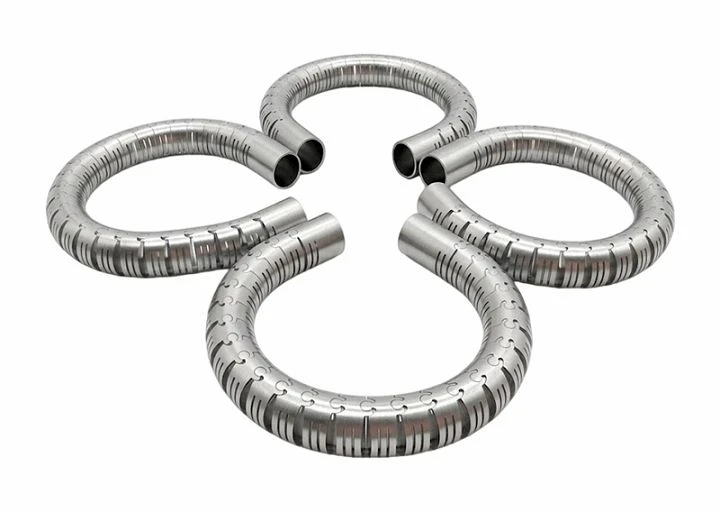
- Seamless Hybrid Integration: Precision CNC tapered SS304V core wire micro-welded inside a spiral-cut SS304 hypothetical shaft.
- High-Adhesion Hydrophobic Coating: Plasma-pretreated PTFE coating ensuring ultra-low friction.
Measurable Results:
- Force Transfer: Tip penetration force transfer efficiency improved by +35%.
- Friction Coefficient: Dynamic friction coefficient dropped to < 0.04 in anatomical track models.